
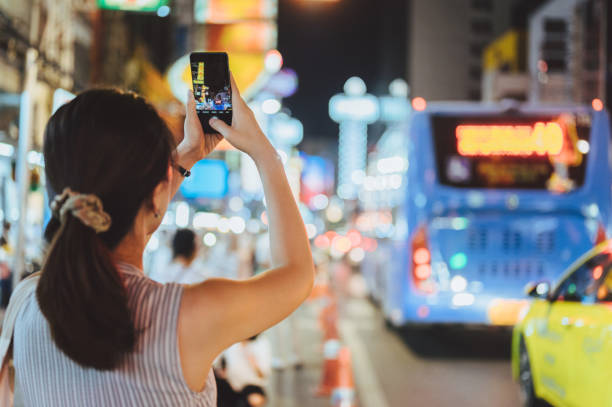
Bangkok offers a perfect blend of professional healthcare and unforgettable experiences. Whether you’re here for surgery or a health check-up, you’ll find quality care, hospitality, and beauty at every corner.https://search.hotellook.com/hotels?checkIn=2025-04-13&checkOut=2025-04-22&adults=2&children=&childrens=&childrenss=&cityId=1677219¤cy=usd&hotelId=1322394493&language=en&marker=44260
Combining World-Class Healthcare with Rich Cultural Experiences
Why Bangkok for Medical Tourism?
Bangkok has become a leading destination for medical tourists, attracting over a million international patients each year. The city offers high-quality healthcare services at a fraction of the cost compared to Western countries. Accredited hospitals, English-speaking medical staff, and advanced technology make Bangkok a trusted choice for:


Cosmetic surgery
Dental procedures
Fertility treatments
Orthopedic surgeries
Health checkups and wellness retreats
Top hospitals include Bumrungrad International Hospital, Bangkok Hospital, and Samitivej Hospital.
Before You Go: Health & Travel Tips
Medical Visa: Tourists can stay up to 60 days on a medical visa, extendable for patients and their companions.
Travel Insurance: Get one that covers elective procedures abroad.
Consultation: Many hospitals offer free online consultations before you travel.
Translation Services: Major hospitals provide interpreter services for Arabic, French, and many other languages.


Tourist Guide: Discover Bangkok Between Appointments
Top Attractions
- The Grand Palace & Wat Phra Kaew
Stunning architecture and the revered Emerald Buddha. - Wat Arun (Temple of Dawn)
Beautifully decorated with colorful porcelain and located by the Chao Phraya River. - Chatuchak Weekend Market
One of the world’s largest markets with over 15,000 stalls—perfect for souvenirs and snacks. - Jim Thompson House
A peaceful museum dedicated to the American silk entrepreneur who helped revive Thailand’s silk industry. - Floating Markets – like Damnoen Saduak
A unique experience where you shop from boats and try local Thai delicacies.
Relax & Recover: Wellness Retreats
Let’s Relax Spa and Health Land Spa: Affordable massages and relaxation therapy.
Chiva-Som Retreat (2 hours away in Hua Hin): Award-winning luxury health resort.
Where to Stay
Near Hospitals: Sukhumvit area is close to many top hospitals and full of luxury hotels and malls.
For Serenity: Riverside hotels like Avani+ or Anantara provide a peaceful post-treatment stay.


Getting Around
BTS Skytrain & MRT Subway: Fast, affordable, and avoids traffic.
Grab App: For reliable taxis and food delivery.
Sample 5-Day Itinerary
Conclusion

17 responses to “A Global Hub for Medical Tourism”
Thanks for sharing
On June 13, 2025, Israel conducted military strikes targeting Iranian nuclear facilities, which has drawn significant international attention and condemnation. The Israeli Defense Forces (IDF) reported that they targeted multiple military sites, including key nuclear facilities, as part of a preemptive strike aimed at neutralizing what they described as a threat posed by Iran’s nuclear ambitions.
In response to these actions, the United Nations has condemned the strikes, emphasizing the need for diplomatic solutions to prevent escalation in the region. The UN ambassador stated that the decision to strike was an “independent Israeli decision,” indicating a lack of consensus on the appropriateness of the military action.
The strikes reportedly resulted in significant casualties, including the death of a senior commander of Iran’s Revolutionary Guards, which has heightened tensions further. Iranian state media has indicated that missile and drone attacks on Israel are expected in retaliation.
In the wake of Israel’s recent military strikes on Iranian nuclear facilities, several major world powers, including Britain, France, Russia, and China, have condemned the actions as “unprovoked.” These nations have expressed deep concern over the escalation of tensions in the region and the potential for further conflict.
The strikes, which occurred on June 13, 2025, targeted multiple sites associated with Iran’s nuclear program, including key military installations. Israeli officials justified the attacks as necessary to prevent Iran from developing nuclear weapons, citing the threat posed by Iran’s nuclear ambitions.
In their statements, the leaders of Britain, France, Russia, and China emphasized the importance of diplomatic solutions and called for restraint from all parties involved. They criticized the Israeli actions as undermining regional stability and violating international norms regarding the use of military force.
In a significant diplomatic move, Britain, France, Russia, and China have collectively withdrawn their ambassadors from Israel in response to the recent military strikes on Iranian nuclear facilities. This decision reflects the escalating tensions and widespread condemnation of Israel’s actions, which these nations have labeled as “unprovoked.”
The withdrawal of ambassadors marks a notable shift in diplomatic relations and underscores the seriousness with which these countries view the situation. They have called for an immediate cessation of hostilities and emphasized the need for a diplomatic resolution to prevent further escalation in the region.
This action follows a series of international criticisms directed at Israel, with various nations expressing concern over the potential for increased conflict and instability. The UN has also been vocal in its condemnation, urging all parties to engage in dialogue rather than military confrontation.
In a reciprocal diplomatic response to the withdrawal of ambassadors by Britain, France, Russia, and China, Israel has also decided to withdraw its ambassadors from these countries. This move reflects the escalating tensions and deteriorating relations following Israel’s military strikes on Iranian nuclear facilities, which have been widely condemned as “unprovoked” by the international community.
The decision to withdraw ambassadors signifies a significant breakdown in diplomatic relations and highlights the ongoing crisis in the region. Israel’s actions have drawn sharp criticism from these nations, prompting them to take a stand against what they perceive as aggressive military actions.
This diplomatic rift is part of a broader context of heightened tensions in the Middle East, with various countries calling for restraint and a return to dialogue to address the underlying issues. The situation remains fluid, and the international community is closely monitoring developments as both sides navigate this escalating conflict.
The UN’s condemnation, backed by the UK, France, Russia, and China, portrays the action as “unprovoked” — a term that reflects political calculus more than legal clarity. Under Article 51 of the UN Charter, a state may use force in self-defense if an armed attack occurs — but preemptive strikes exist in a gray zone. Israel’s argument likely hinges on the “imminence” clause, as articulated in the Caroline case (1837): when the threat is instant, overwhelming, and leaves no choice of means.
Israel’s June 13, 2025 strikes on Iranian nuclear facilities represent a classic case of preemptive self-defense, aligning with the Begin Doctrine — the principle that Israel will not allow enemy states to acquire nuclear weapons. It echoes past operations. (1) Osirak (1981) against Iraq’s nuclear reactor. (2) Operation Outside the Box (2007) against Syria.
Yet the withdrawal of ambassadors by four permanent members of the Security Council — including the two Western nations historically sympathetic to Israel — signals a profound diplomatic rupture, potentially worse than during the 1956 Suez Crisis or 1982 Lebanon War.
But this time, the scope is broader, the stakes are higher, and the diplomatic fallout is far more severe. The reciprocal withdrawals by Israel, we are now witnessing a partial diplomatic isolation of Israel from key global players — a scenario that dangerously echoes the pre-1967 international atmosphere, only now with a nuclear shadow.
The continuity between medieval Church slanders and modern UN blood libels. Iran, a regime openly threatening genocide (e.g., statements by top officials calling for Israel’s destruction), is shielded by powers that once committed or abetted genocide. Those same powers — Britain and France — betrayed Jewish refugees pre-1948, yet now sanctimoniously claim Israel undermines “stability.” Russia, currently engaged in illegal war and nuclear threats in Ukraine, calls Israel’s actions illegal. China, persecutor of Uyghurs and enforcer of state repression, calls for restraint.
These are not neutral arbiters of international law. They are part of a long tradition of holding Jews to impossible standards, demanding “restraint” even when faced with annihilation. The UN has inherited the mantle of Church anti-Jewish theology in secularized diplomatic language. Resolution 3379 (Zionism = Racism) was the modern Inquisition; Today’s condemnation of Israel’s self-defense is the new blood libel; The ICJ’s silence on Iran’s genocidal threats is a political Kiddush Hashem inversion — punishing the victim for refusing to lie still.
Iran will likely retaliate via proxies: Hezbollah, Houthis, and Shi’ite militias in Syria or Iraq. Israel may face multi-front escalation, forcing it into a prolonged regional war.
The Gulf States’ reaction (e.g., UAE, Saudi Arabia) will be critical: they fear Iran, but won’t publicly back Israel under current diplomatic pressure. The US response under the leadership of President Trump contrasts with the European barbaric anti Jewish history.
This is more than a military episode — it’s a constitutional test of Jewish sovereignty. If Israel, as a free Jewish nation, cannot defend itself without being slandered and isolated, then the very post-Holocaust consensus that birthed the UN is shattered. Once again, the Jewish state is punished not for what it does, but for daring to exist — and fight to survive.
So beautiful article ✅
❤️❤️❤️
😊🌺Very informative article dear Noga. Bangkok seems to be a very good place for medical treatments. I wish you a blessed Sunday.😊🙏🏻✨✍🏻🦋🌺
💞🙏🏻👋🏼💞
Have a nice day and good luck to you too. 🥰